Underwater Fishing Camera for Beginners UK: What to Buy First
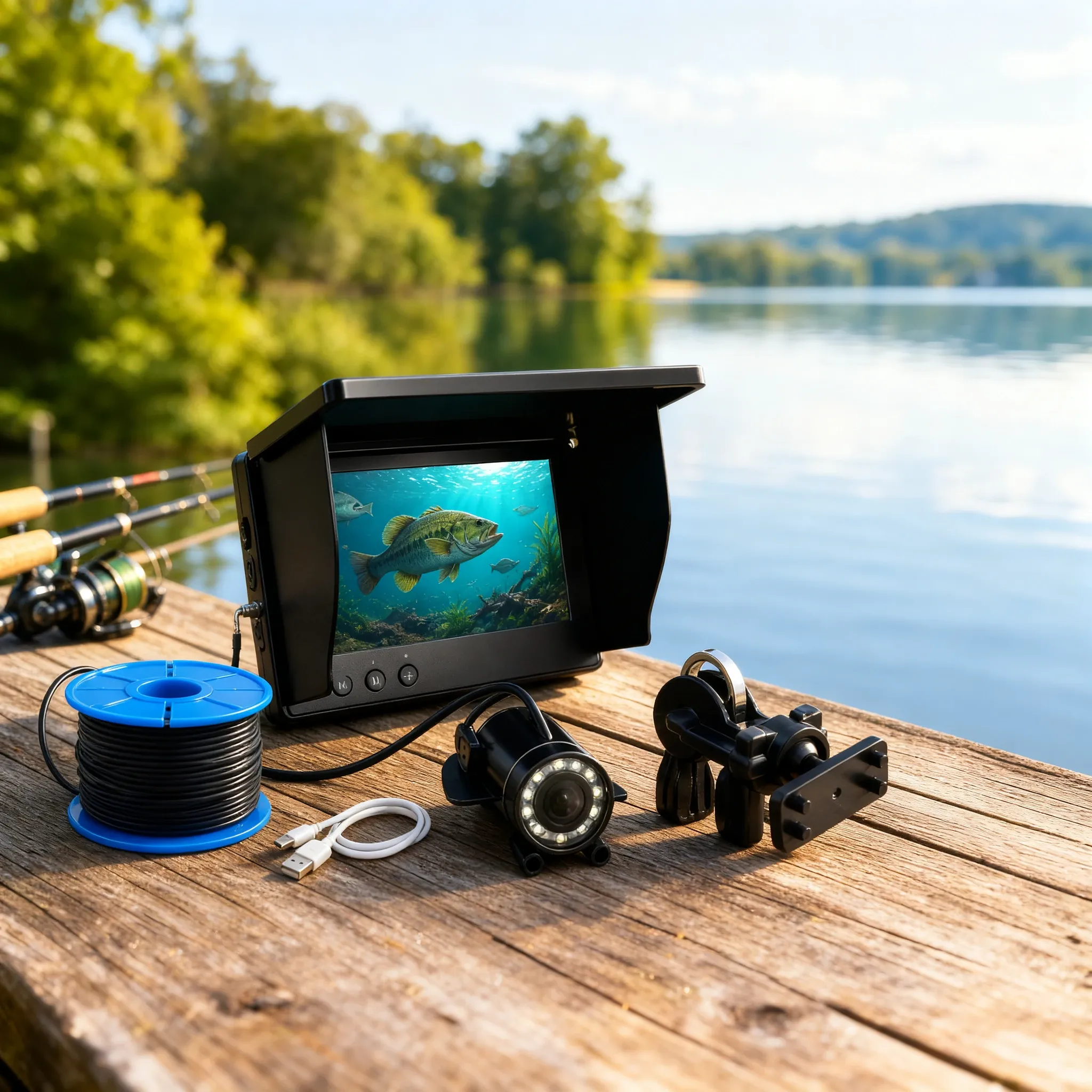
Choosing your first underwater fishing camera as a beginner in the UK comes down to three things: a screen you can read on the bank, lighting that copes with our murky water, and controls simple enough that you will actually use the thing. You do not need to understand spec sheets, and you do not need to spend serious money: a complete starter kit such as the FishFind portable underwater fishing camera costs £73.16 inc. VAT and works straight out of the box.
TL;DR: First camera, keep it simple: 4.3 inch screen, infrared for stained water, 15 m of cable, charge it the night before, lower it slowly, look, fish. Expect clear pictures in clear water and honest short-range viewing in coloured water — and if a listing promises crystal vision in any conditions, walk away.
What worries first-time buyers — and what actually matters
Three fears stop most beginners at the checkout, and they deserve straight answers rather than sales talk.
"What if the water is too murky to see anything?" This is the big one, and the honest answer is: sometimes it will be. British lakes and canals carry colour, and in genuinely thick water every camera at every price sees a short distance at best. What separates a useful first camera from a drawer ornament is infrared lighting — the FishFind unit carries 8 infrared LEDs — which keeps shapes, movement and your rig visible at close range when the water is stained. Clear-water venues, gravel pits and the upper layers give the postcard picture; coloured water gives a practical close-up view. Both are useful; only one gets shown in adverts.
"I don't understand the specifications." You need less of them than you think. Resolution numbers matter less than whether the screen is readable outdoors and whether the lighting suits UK water. If you can rule those two in, you are most of the way to a good first buy.
"What if it's too complicated and ends up in a cupboard?" A fair fear — plenty of fishing electronics are menu mazes. This is why a first camera should have essentially no learning curve: one battery to charge, one cable to lower, one screen to watch. No settings you must get right, no app to pair, nothing to interpret. If a product page needs a tutorial video for basic use, it is not a beginner's unit.
The only three specs a beginner should check
1. The screen: readable, not huge
A 4.3 inch TFT LCD is the sweet spot for a first camera: big enough to see whether that shape is a fish or a branch, small enough to sit beside you on the bank without ceremony. Check the screen works in daylight — shade it with your body on bright days — and ignore anything that requires your phone as the display for your first unit; standalone is simpler.
2. The lighting: infrared for UK water
Infrared night vision sounds like a gadget feature; in Britain it is the difference between a camera you use and one you abandon after the first cloudy-water session. Under infrared the picture goes black-and-white, which is normal and useful — outlines and movement stand out. White-light-only cameras are built for clearer water than most of us fish.
3. The cable and battery: enough, and charged
A 15 m cable covers margins, near-bank spots and most stillwater swims — more than enough for learning the tool. On batteries, a 2600 mAh cell gives a session of checking-style use; cold mornings shorten runtime, so charge fully the night before and keep the monitor in a pocket or bag between looks in winter.
Your first session with the camera: three steps
- Check the venue allows it. Some UK fisheries restrict electronic aids; a quick look at the rules page saves an awkward conversation.
- Lower it slowly and let the picture settle. Dropping the lens fast stirs silt and shows you a snow globe. Ease it down, give it a moment, and pan the spot by moving the cable gently.
- Look for three things, then fish. Is the bottom clean or weedy? Are there fish or fresh feeding signs? How does your rig sit when you lower it in? Answer those, get the camera out of the swim, and fish with the confidence of someone who has seen the answer.
That is genuinely the whole skill. Everything else — reading bottom types at a glance, spotting the difference between line bites and feeding fish — arrives free with use.
Is a first underwater camera worth £73.16?
Think about what the money is buying: the end of a specific, repeating frustration. Every blank session where you never knew whether the swim held fish, every hour fished over a hookbait that had settled into weed — those are the costs of fishing blind, and they do not show up on a receipt. A starter camera pays for itself in saved session time the first few trips you use it to move off a dead area early or fix a buried bait.
The risk side is covered in the ways that matter to a cautious first buyer: the FishFind unit comes with a 12-month UK warranty, 30-day returns if it turns out not to suit your fishing, free UK delivery, and a 4.8 rating from 252 reviews, including plenty from people using an underwater camera for the first time. First camera, first go: that is a normal buyer here, not the exception.
If you are weighing this against a sonar-style fish finder instead, the short version is that cameras show and sonar maps — the full comparison is in our underwater camera vs fish finder guide.
When should a beginner not buy one?
Honesty helps here. Skip a camera for now if almost all your fishing is on one small, clear, familiar pond — you can probably see everything that matters already. Wait if your priority is mapping big waters from a boat, where sonar is the right first tool. And if you fish exclusively at long range beyond where you would ever position a cable, the camera becomes a margin-checking tool only — still handy, but be realistic about how often you would use it. For everyone else fishing typical UK banks, it is the single most direct upgrade to your decision-making. When you outgrow the basics, the full underwater fishing camera UK buyer's guide covers the deeper criteria.
Beginner FAQs
Does an underwater fishing camera work in murky water?
At close range, yes — infrared keeps outlines and movement visible in stained water. No camera sees far through heavy colour, so treat murky-water use as close-quarters checking rather than underwater sightseeing.
Do I need to understand camera specifications to buy well?
No. Check three things: a readable screen around 4.3 inches, infrared lighting for UK conditions, and a cable long enough for your venues (15 m covers most bank fishing). The rest is marketing.
Is a cheap underwater fishing camera worth it, or should I save up?
For a first camera, simple and affordable beats feature-heavy. You are learning whether direct viewing suits your fishing; £73.16 with a 30-day return window answers that question at low risk. Upgrade later only if you hit a real limit.
Will I need to set anything up before fishing?
Charge the battery, uncoil the cable, switch on. There are no menus to configure or apps to pair on a screen-and-camera kit — which is exactly what you want first time out.
Can I use one from a pier or on holiday at the coast?
Yes — harbour walls and piers are great places to watch structure, and beginners often learn the picture fastest in clearer salt water. Rinse the camera and cable in fresh water afterwards to keep the connectors happy.
Ready to try FishFind?
Shop Now — £73.16