Underwater Camera vs Fish Finder: Which Should UK Anglers Buy?
Underwater camera vs fish finder comes down to one question: do you want to watch what is happening in your swim, or map it? A camera sends live video from a lens on a cable, so you see actual fish, weed and your rig. A fish finder (sonar) pings sound at the bottom and draws the echoes, so it covers far more water but shows you interpretations, not pictures.
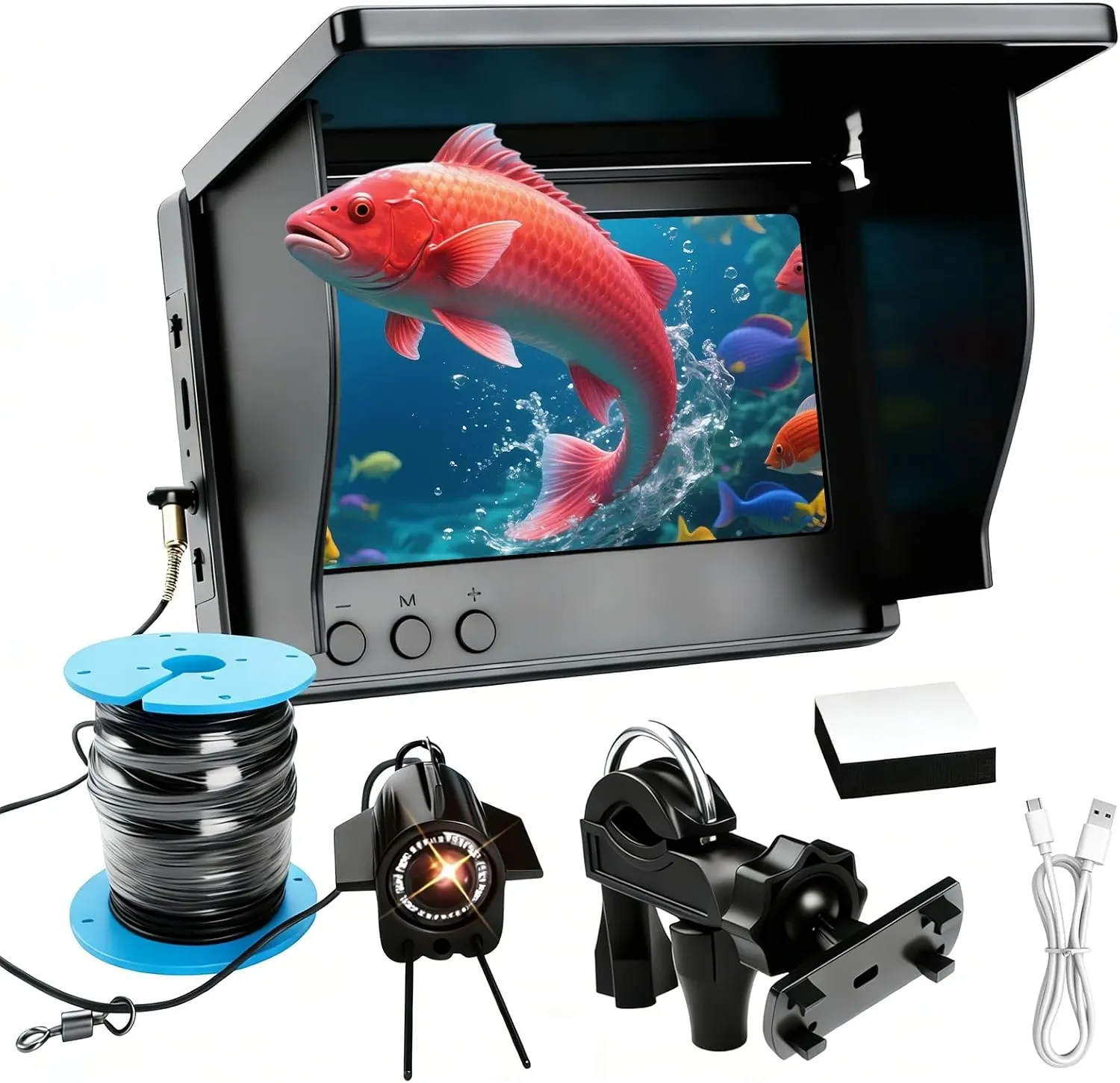
TL;DR: Buy the camera first if your fishing happens at bank range and your frustration is not knowing what is really down there. Buy the sonar first if you need depth and contours across big water or from a boat. If you already own a castable sonar and still feel like you are guessing, a camera such as the FishFind portable underwater fishing camera (4.3 inch screen, infrared night vision, £73.16) is the natural second tool rather than another sonar upgrade.
Underwater camera vs fish finder at a glance
| What you care about | Underwater camera | Fish finder (sonar) |
|---|---|---|
| What you see | Live video: real fish, weed, bottom, your rig | Arches, icons and shading you must interpret |
| Learning curve | Minutes — if you can watch a screen, you can use it | Real skill in reading returns; menus and settings to learn |
| Coverage | Close range around the lens | Whole columns and wide areas, quickly |
| Murky water | Short-range only; infrared helps contrast | Unaffected by colour — sound does not need visibility |
| Depth mapping | No — it shows, it does not measure areas | Its core job: depth, contours, drop-offs |
| Species and behaviour | Identify species and watch feeding directly | Educated guesses from size and position of returns |
| Typical UK price logic | Simple screen-and-camera kits from around £73.16 | Ranges widely with frequency, mapping and app features |
What does a camera show that sonar arches cannot?
If you have owned an app-based castable sonar for a season, you will know the routine: a promising arch, a confident cast, and then nothing — because the arch was a branch, a ball of weed, or a fish that looked at your bait and left. The sonar could not tell you which. A camera can, because you watch it happen.
- Species, not signals. A shoal of bream and a pair of carp can paint similar returns; on video they are unmistakable.
- Behaviour, not presence. You see whether fish are feeding hard, mouthing free offerings, or drifting through disinterested — which decides your next move far better than knowing something is there.
- Presentation, not hope. The single biggest win: watching how your hookbait actually sits. Buried in silt, masked by silkweed, or proud and clean — sonar has no opinion; the camera settles it.
- No interpretation layer. There are no sensitivity sliders or bottom-hardness palettes to second-guess. If your current unit's menus defeat the fishing mates you lend it to, note that a camera has essentially nothing to learn: lower it, look, decide.
Where does a fish finder still win?
Being honest about this cuts both ways. Sonar remains the better tool when the job is scale or visibility:
- Mapping water. Finding bars, gullies, plateaux and depth changes across a large pit or reservoir is sonar's home game. A camera on a 15 m cable cannot survey; it inspects.
- Heavily coloured water. Sound does not care about clarity. In water where even infrared only buys you close-range contrast, sonar keeps working at full range.
- Moving platforms. From a boat or kayak on the drift, sonar builds a picture continuously; a trailing camera does not.
- Raw depth numbers. If you just need to know it is 3.2 m at the third rod length, sonar answers instantly.
And on the objection most upgraders raise — is infrared night vision a gimmick? No, but it is not magic either. Infrared meaningfully extends what you can see in stained water and low light at close range, typically rendering a black-and-white image where movement and outlines stand out. It will not turn a silt-storm into a swimming pool, and any brand that implies otherwise is overselling.
Can you use an underwater camera and a fish finder together?
Yes — and for anglers who already own sonar, this is usually the right answer to the vs question. Let each tool do its job: the sonar finds the depth change or the hard spot from range, then the camera confirms what it actually is and whether fish are using it before you commit bait and rigs to it. The combination turns "I think that return was fish" into "I watched two carp move over the gravel". For the wider buying criteria on the camera side — screens, cables, batteries, cold-weather behaviour — see our underwater fishing camera UK buyer's guide.
Which should UK anglers buy first?
Buy the camera first if you fish at bank range on stillwaters, canals and commercials; if your recurring pain is not knowing whether the swim holds fish or how your rig has landed; or if previous electronics defeated you with menus. It is the cheaper experiment too: the FishFind unit is £73.16 inc. VAT with a 12-month UK warranty, 30-day returns and a 4.8 rating from 252 reviews, so trying the direct-viewing approach is a low-risk decision. Complete beginners weighing up their first purchase may prefer our underwater fishing camera for beginners UK guide.
Buy the sonar first if you fish big, deep or featureless water where finding the right area is the hard part, or you fish mostly from a boat. Add the camera later for confirmation work at close quarters.
Underwater camera vs fish finder FAQs
Is an underwater camera better than a fish finder?
Neither is better outright; they answer different questions. The camera is better at showing what is there and how fish behave at close range; the fish finder is better at measuring depth and covering water. Match the tool to the job, or run both.
Do underwater cameras work in murky UK waters?
At short range, yes — infrared lighting keeps outlines and movement visible in stained water. At long range, no camera beats heavy colour, which is exactly where sonar keeps its advantage.
Is a camera easier to use than a sonar fish finder?
Considerably. There are no returns to interpret and no settings to tune: the screen shows video the moment the lens is down. If the person you hand it to can watch television, they can use it.
Can a camera replace my castable sonar?
Only if you rarely need depth mapping. Most upgraders keep the sonar for location work and use the camera to confirm spots and watch presentation — the two together cover each other's blind spots.
What does a decent underwater fishing camera cost in the UK?
Straightforward screen-and-camera kits sit around the £73.16 mark, with the price rising for recording features and longer cables. Sonar pricing varies much more widely depending on mapping and app features.
Ready to try FishFind?
Shop Now — £73.16