Underwater fishing camera vs fish finder camera UK: UK Practical Guide
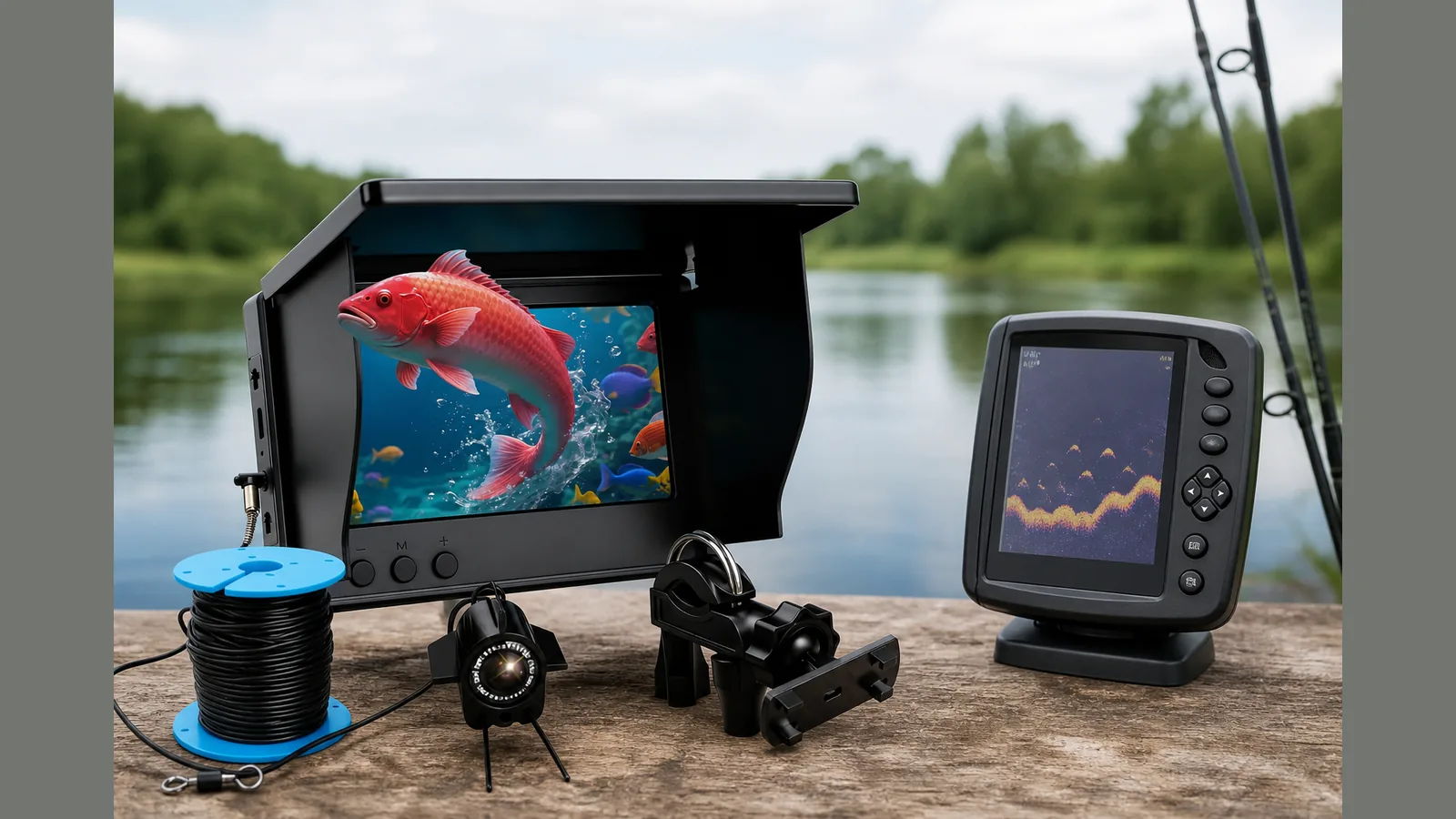
For UK anglers comparing an underwater fishing camera vs fish finder camera UK, the practical difference is simple: a fish finder (sonar) maps depth, bottom shape and likely fish marks as symbols or arches, while an underwater fishing camera shows a live picture of what is in front of the lens. Choose sonar when you need wide search and structure reading; choose a camera when you need visual confirmation of bait, bottom type, weed or fish behaviour.
Direct comparison answer
A fish finder works by sending sound pulses and interpreting returns. It helps you scan water quickly, find contours and decide where to fish next. An underwater fishing camera works by lowering a waterproof camera and viewing the scene on a screen, so you see colour, cover and movement rather than a sonar interpretation.
UK tackle discussions often frame the same choice as “fish finder or underwater camera”, not as two names for one tool. The two devices answer different questions: “Where might fish be?” versus “What am I looking at right now?”
Neither option guarantees catches. Sonar can miss fish or show clutter; cameras can be limited by murky water, glare, night conditions without suitable lighting, or a poorly placed lens.
When each option wins
When a fish finder wins
- You need to cover water quickly from a boat, kayak or bank where casting and moving are frequent.
- You care about depth changes, drop-offs, ledges and general bottom hardness more than a photo-like view.
- You want to mark areas to return to, then fish them with conventional tactics.
When an underwater fishing camera wins
- You want to see bait presentation, weed beds, snags, gravel or silt with your own eyes.
- You are checking a swim, feature or baited spot at close range rather than scanning a whole stretch.
- You value visual learning—how fish approach bait, how clear the water is, or whether the bottom is fishable—over symbolic sonar marks.
How to choose a underwater fishing camera UK
When you are deciding how to choose a underwater fishing camera UK, match the tool to the job: portability and a clear screen for bank or boat use, and infrared or night-friendly lighting if you expect low light. Keep sonar and camera roles separate—do not treat a live video feed as a substitute for wide-area fishfinding.
Decision table
| Need | Lean towards fish finder | Lean towards underwater camera |
|---|---|---|
| Search a large area | Yes | No |
| See exact bottom or bait visually | No | Yes |
| Read depth and contours | Yes | Limited / not the main role |
| Confirm weed, snags or clear gravel | Indirect | Yes |
| Murky or stained water | Often still useful | View may be poor |
| Learning fish behaviour at the bait | Limited | Yes, when visibility allows |
Checklist before buying underwater fishing camera UK
- Decide whether you mainly need search (sonar) or close-range viewing (camera).
- Check that the kit includes a screen you can read outdoors and a camera suited to your usual light conditions.
- Plan how you will deploy and retrieve the camera safely around snags and weed.
- Accept visibility limits in coloured UK water; a camera does not create clear water.
- Keep expectations honest: video helps you see; it does not automatically find or catch fish.
Caveats
Do not confuse “camera” with “fish finder”. An underwater fishing camera shows what is in view; it does not reliably replace sonar scanning or promise fish detection.
Avoid common mistakes using underwater fishing camera UK setups: lowering the camera into thick silt and expecting a clear picture; judging a whole venue from one tight spot; assuming night vision solves every low-light session; and treating any on-screen fish as a guaranteed catch.
Published UK and European guides regularly pose the same plain question—fish finder versus underwater camera—because anglers often expect one device to do both jobs. Use each for what it is designed to do, and combine them only if your fishing style truly needs both search and visual checks.
If your screen is blank on sonar, a camera may help you understand the spot—but it will not magically scan the whole swim the way a fish finder can.
Next step
If you have decided you need live underwater viewing rather than sonar search, look at a portable underwater fishing camera with a screen and IR night vision as a viewing tool for close-range checks. Review the current options on our FishFind portable underwater fishing camera details page and match the kit to how and where you fish in the UK.
FAQ
Is an underwater fishing camera the same as a fish finder camera?
No. In everyday UK usage, a fish finder uses sonar; an underwater fishing camera provides a video view. Marketing phrases that mix the words can blur that line, so judge the product by whether it scans with sound or shows a picture.
Can I use only a camera and skip a fish finder?
Yes, if your fishing is mostly about inspecting known swims, features or baited areas. If you need to explore large stretches for depth and structure, a fish finder remains the more suitable search tool.
What should I check before buying for UK waters?
Use a short checklist before buying underwater fishing camera UK gear: outdoor-readable screen, suitable lighting for your sessions, practical deployment, and realistic expectations about water clarity. Prefer clear product descriptions over unverified depth, cable or catch claims.
Where can I read more background on the choice?
For wider context on the fish-finder-versus-camera question and UK-focused underwater camera round-ups, see the public guides linked in the citations for this article.