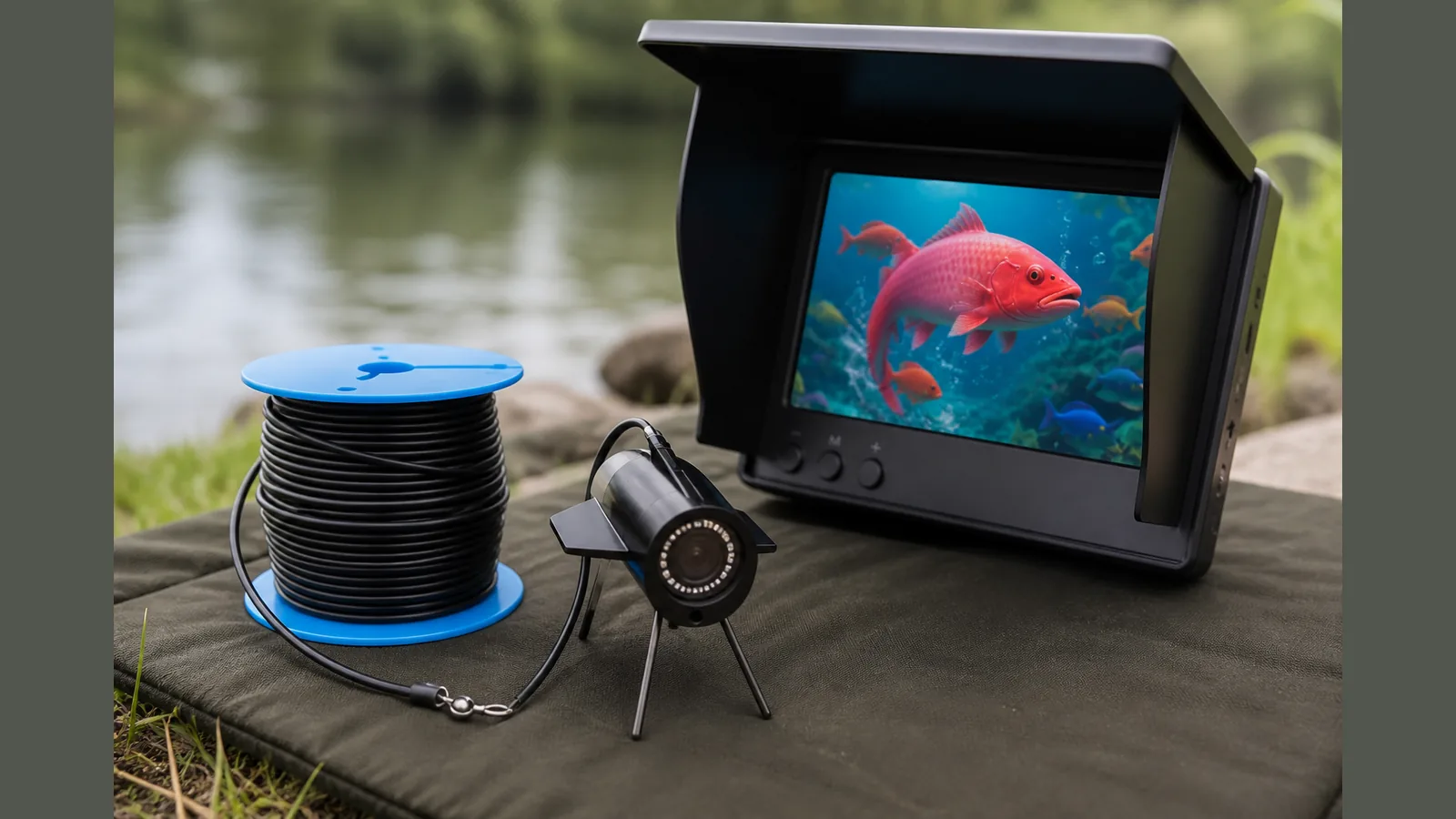
Underwater fishing camera capacity rating explained UK: UK Practical Guide
In UK angling terms, an underwater fishing camera “capacity rating” is a plain-English way of describing the practical limits of a portable viewing kit — typically how long it can run, how far the camera head can be lowered, and what the screen and night-vision setup can usefully show — rather than a sonar fishfinder claim or a guaranteed catch result. This guide explains that idea in British English, how it maps to the job on the bank or boat, what you should not invent from marketing copy, and a simple checklist before you buy.
Plain-English definition
A capacity rating, in this context, is not a single universal standard stamped on every product. It is a shorthand for the working envelope of an underwater fishing camera: the combination of power endurance, cable reach for lowering the camera, display usability, and viewing conditions (including infrared night vision on kits that include it). Treat each figure on a listing as a claim about that kit’s intended use, not as proof of fish location or bite rates.
Keep camera viewing separate from sonar. An underwater fishing camera shows what is in front of the lens; a fishfinder estimates returns with sound. Mixing those jobs in one sentence is a common source of buyer confusion.
How it relates to the job
On the water, capacity matters because it shapes whether you can finish a session without running out of usable runtime, whether the camera can reach the depth or distance you need to inspect, and whether the screen remains readable in your light conditions. When you choose kit, underwater fishing camera buyers’ guidance commonly urges you to weigh the environment (freshwater, saltwater, ice fishing, and so on), camera size, image quality, battery life, and cost — that practical checklist is the job-side meaning of “capacity”, not a sports score.
- Match the viewing job: structure, bait presentation, or bottom composition — not a promise to “find” fish automatically.
- Match the venue: stillwater, river, estuary, or ice requires different handling and care, even when the screen looks the same.
- Match session length: battery endurance is part of capacity; a bright day or cold weather can change how long a charge feels usable.
What not to invent
Do not treat catalogue language as verified laboratory data. Avoid inventing depth ratings, cable-length accuracy, certifications, test scores, sales volume, or unsupported specifications. Do not turn infrared night vision into a claim about seeing every fish in murky water. Do not equate a portable camera-with-screen kit with a dedicated dive action camera’s waterproof rating or cinema resolution claims from other categories — for example, UK dive-camera buying guides discuss waterproof depth and video resolution for divers’ action cameras, which is a different product class.
Internal product options (for example, different screen sizes or cable lengths offered as kit variants) describe what is sold together; they are not public proof of performance until independently verified. If a number is not on a trustworthy label or your own measured check, leave it out of your decision narrative.
UK framing
For UK waters, frame capacity around how and where you actually fish: bankside, boat, or ice sessions, and whether you need freshwater or saltwater care routines. UK underwater fishing camera round-ups often group use cases such as ice, boat, and bankside fishing — use that as a planning lens, not as a ranking you must copy.
Secondary checks that sit beside capacity ratings:
- Checklist before buying an underwater fishing camera UK: venue type, session length, screen readability, night-viewing need, cable reach for the spots you fish, aftercare for salt or silt, and total kit cost.
- Common mistakes using an underwater fishing camera UK: expecting sonar-style fishfinder results from live video alone; over-trusting unverified depth or cable claims; ignoring battery behaviour in cold; fouling the lens and blaming “capacity”.
- How to choose an underwater fishing camera UK: decide the viewing job first, then compare only the limits that affect that job, and keep dive-camera advice separate from fishing-camera kits with monitors.
Next step
If you want a portable underwater fishing camera with a screen and infrared night vision for inspecting structure and presentation, review the current kit options and choose the variant that matches your session length and reach needs — without treating any figure as a fish-finding guarantee.
View the FishFind portable underwater fishing camera details
FAQ
Is a capacity rating the same as a fishfinder rating?
No. Capacity here describes the practical limits of a viewing camera kit. Sonar fishfinders work differently and should not be inferred from camera marketing alone.
Which factors matter most when comparing capacity?
Environment of use, camera size, image quality, battery life, and cost are the usual decision factors called out in underwater fishing camera buying guidance — use them as a checklist, not as invented benchmarks.
Can I rely on dive-camera waterproof numbers for a fishing camera kit?
Not by default. Dive-oriented guides may cite waterproof depths and video resolutions for action cameras used by divers; that is a different product class from many portable fishing cameras with separate monitors. Compare like with like.
What should I avoid inventing when reading UK listings?
Skip invented depth ratings, precise cable accuracy, certifications, lab tests, and catch guarantees. If the listing does not evidence a claim, treat it as unproven.