How to choose a underwater fishing camera UK: UK Practical Guide
Direct buyer answer
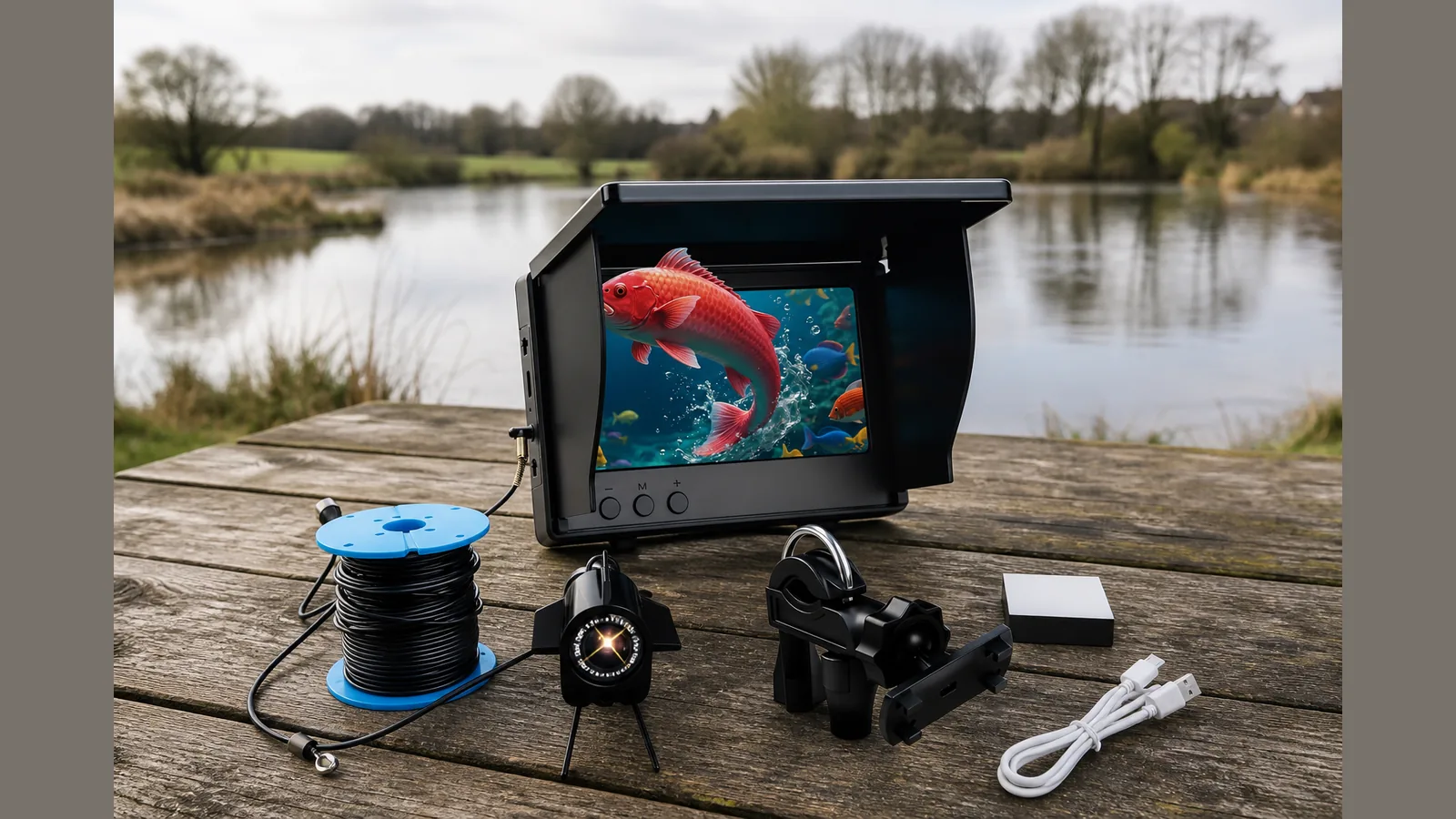
If you need how to choose a underwater fishing camera UK buyers actually use on lakes, canals and coastal spots, start with a portable underwater fishing camera that pairs a readable screen with infrared (IR) night vision, then confirm cable length, display size and power options on the listing before you buy—without treating the camera as a sonar fishfinder.
Beginner-facing round-ups often highlight IR night vision and a range of screen sizes as practical features for new anglers exploring underwater fishing cameras. Wider underwater-camera guides also stress matching the setup to skill level and budget rather than chasing the most expensive kit. Diving-focused UK camera advice is useful context for waterproof thinking, but a fishing camera is for live viewing below the surface while you fish, not for replacing a dive action-cam workflow.
What to check on the listing
Use the product page as your checklist. Look for clear wording that the offer is a portable underwater fishing camera with an on-board screen and IR night vision, then verify the variant you need.
- Screen size options — listings may show different bright IPS display sizes (for example 4.3-inch or 5-inch class options); pick what you can read outdoors without inventing brightness claims beyond what the seller states.
- Cable length options — variants may list different camera cable lengths (for example 15 m, 20 m, 30 m or 50 m class kits). Treat those figures as listing options to confirm, not as proven depth ratings or accuracy guarantees.
- Kit format — some SKUs ship with a toolbox-style case, others with a colour box; choose the packaging and complete-camera kits (not display-only lines) that match how you will store and transport the unit.
- Language and plug variants — where the listing offers language or regional plug choices, select the option that fits your UK setup and team handover needs.
- What the camera is for — live underwater viewing to help you see structure, bait and fish activity; it is not automatic proof of fish location the way sonar fishfinders claim.
For a concrete example of a portable screen-and-camera style offer, open the current FishFind portable underwater fishing camera details and match the variant fields above to your trip type.
Fit and use-case questions
Ask these before you shortlist:
- Will you mostly fish from bank, kayak or small boat—and do you need a compact, portable screen you can steady with one hand?
- Do you need IR night vision for low light or early/late sessions, as beginner camera guides often emphasise?
- Which cable-length option on the listing covers the depth range you intend to view, without assuming the printed length equals a certified working depth?
- Who will use it next—if you must handover underwater fishing camera to new staff, is the on-screen language, cable coiling and packing method simple enough to demonstrate in one short briefing?
- Are you choosing a fishing camera for live viewing, or an underwater photography/dive camera for recording—UK dive buying guides and general underwater photography starters serve different jobs.
In short, how a underwater fishing camera works UK anglers usually need is: drop or lower the camera on its cable, watch the live feed on the screen, and use IR when light is poor—then decide your next cast or lure change from what you see, not from a fishfinder lock.
Claim-safe caveats
Keep expectations honest so your purchase decision stays claim-safe:
- Do not treat cable length on a listing as a verified depth rating or as proof of underwater fishing camera accuracy.
- Do not assume IR night vision equals guaranteed fish identification in every water clarity condition.
- Separate camera viewing from sonar fishfinder claims; a viewing camera helps you see, it does not automatically “find” fish the way dedicated sonar marketing often implies.
- When you check how to check underwater fishing camera accuracy UK-style questions, rely on what you can verify on the day (clear image, stable cable handling, readable screen) and on the seller’s stated options—avoid invented test scores, review quotes or performance percentages.
- Budget bands for underwater cameras vary widely across photography and dive markets; use that only as a reminder to buy for your skill and use case, not as a price promise for this fishing-camera offer.
Next step
If a portable screen-plus-IR fishing camera fits your UK sessions, compare the listed display sizes, cable options and kit formats on the FishFind portable underwater fishing camera product page, then choose the variant that matches how you fish—not marketing language about guaranteed catches.
FAQ
Is an underwater fishing camera the same as a fishfinder?
No. A fishing camera shows a live underwater view on a screen; a sonar fishfinder estimates returns from sound. Keep those claim types separate when you compare products.
What features matter most for beginners?
Beginner-oriented underwater fishing camera articles commonly point to IR night vision and different screen sizes as helpful starting features. Confirm both on the listing, then pick a cable length option suited to your water.
How should new staff learn the kit?
For a clean handover underwater fishing camera to new staff, demonstrate cable deployment and retrieval, screen readability outdoors, IR on/off where available, and how the chosen packaging stores the cable and camera after use.
How do I judge “accuracy” without lab tests?
For how to check underwater fishing camera accuracy UK shoppers can do in practice, judge whether the live image is clear enough for your water and lighting, whether the selected cable option reaches the zone you want to view, and whether the listing’s screen and kit details match what arrived—without inventing depth certifications or fish-finding guarantees.